If you’ve spent a season watering with a hose snaking across the yard, you know the difference a solid pumping setup can make. Deep well pumps, when chosen and installed with care, transform an unruly patchwork of sprinklers and drip lines into a reliable, efficient system that keeps vegetables vibrant, lawns green, and garden beds thriving. My own journey with deep wells began on a midsummer day when the well ran dry just as the tomatoes started ripening. The experience taught me to think beyond the price tag and toward reliability, compatibility, and long-term maintenance. Goulds, a brand that shows up on job sites and backyards alike, has become a touchstone for me when I’m sizing up a system, diagnosing a problem, or selecting a replacement.
In this piece I’ll share practical viewpoints drawn from fieldwork and real-world use. I’ll talk about what makes Goulds deep well pumps stand out for garden irrigation, how to choose the right model for your well depth and water volume, and what to expect during installation, operation, and upkeep. If you’re weighing “where to buy Goulds deep well pumps” or simply trying to understand the trade-offs between different models, you’ll find grounded guidance here.
Why a deep well pump matters for a garden system
Water is life in a garden, but so is pressure. A shallow well pump might pull water from a few dozen feet, yet most domestic wells stretch deeper—often well beyond 100 feet. A shallow system can struggle to maintain stable pressure as the demand fluctuates with weather, sprinkler cycles, and seasonal growth. A deep well pump pulls from those depths with a more powerful motor and a better balance of flow rate and head pressure. The result is a more consistent spray pattern, fewer dry spots in beds, and less cycling of the pump, which translates to longer life for seals, bearings, and the motor itself.
Goulds pumps have a legacy in the irrigation world that isn’t just about raw horsepower. They’re built with practical field considerations in mind: robust stainless steel or cast iron components, watertight seal assemblies, and motors designed to run under variable loads. The Goulds line typically emphasizes reliability, ease of service, and a common sense approach to pump head and flow specifications. In my experience, those traits show up every time I walk into a yard and see a system designed with future maintenance in mind.
Sizing up a deep well pump for garden irrigation
Choosing the right pump starts with three questions: how deep is the well, what is the required flow to satisfy the irrigation layout, and how much pressure do you need to keep sprinklers and drip emitters operating evenly? A well-drawn plan saves headaches when dry spells hit or when you expand the garden.
First, measure or confirm your well depth. This is not just a number; it determines the maximum lift the pump must achieve and affects the selection of the impeller size, motor horsepower, and the controller you pair it with. A common garden scenario might involve a 150 to 300 foot well with a pump capable of delivering 8 to 15 gallons per minute (GPM). That range is broad, and your actual needs will depend on the layout of your irrigation circuits and the pressure you want at the farthest sprinkler head.
Second, evaluate the irrigation layout. Are you running a handful of sprinklers with a hose-end timer, or do you have a large drip network with multiple zones and pressure-compensating emitters? A drip system benefits from a stable pressure and lower flow per emitter, while spray heads and rotor sprinklers require a higher GPM to cover larger areas with uniform distribution. With Goulds, you’ll often see models that balance head pressure (the vertical distance from water level to pump) with gallons per minute. If you anticipate growth—adding more beds, a greenhouse, or more sprinkler zones—consider a pump with a slightly higher permissible flow so you can scale without swapping the pump again.
Third, consider the voltage and control strategy. Many garden installations favor a standard 230-volt configuration with a pressure switch and a starter or a pressure tank, while others lean toward a variable frequency drive (VFD) for precise pressure management. If you’re new to the world of farmstead irrigation or small-scale horticulture, I’d lean toward the simpler, robust setup: a Goulds deep well pump matched to a dependable pressure switch and a properly sized pressure tank. It’s not glamorous, but it’s exceptionally durable and easy to troubleshoot if a cycle repeats abnormally during a drought or a rain event.
What to expect from Goulds deep well pumps in practice
Durability is built into the design in many small, meaningful ways. The pump housing and motor are designed to withstand the realities of outdoor installation: temperature swings, mineral-laden water, and occasional sand or grit that comes with groundwater pumping. When you’re dealing with well water, you’re not just moving liquid; you’re managing sediment, dissolved minerals, and the occasional storm event that stirs up the aquifer. Goulds layers their solution with seals and bearings that can handle those conditions, along with pump bodies that resist galling and wear in the impeller and casing.
From a performance perspective, you’ll notice the relationship between your well depth and the delivered head. If your well depth increases during the drought season, the pump will work harder and draw more current to push the same volume of water. In a tested setup I installed last year, a 180-foot well with a mid-range Goulds model maintained 9 GPM at 40 psi for drip and sprinkler zones. That combination was enough to cover a 6,000 square foot zone with a mix of rotors and drip lines, allowing a steady stream to keep the soil texture steady across a long, hot stretch. It’s not just about raw throughput. The pump’s ability to sustain steady pressure reduces the chance of water hammer and the typical surge that can disrupt emitters or spraying patterns.
Installation realities you’ll want to plan for
Installing a deep well pump is never a purely theoretical exercise. It’s a hardware puzzle that requires careful alignment of electrical, hydraulic, and plumbing components. I’ll share a few knobs you’ll want to tune in your own project.
First, wellhead preparation matters. If you’re replacing an old jet pump or a submersible that’s seen better days, your first move is to remove the old unit and assess the piping. Stainless steel or hard copper piping offers better longevity than flexible hoses that may sag or crack under pressure. You’ll want a solid check valve and a capable foot valve to prevent backflow and reduce the chance of the pump losing prime after a long period of inactivity.
Second, consider the well’s static water level and the drawdown. The static level is the water height when the well is rested; the drawdown is how far the water drops when pumping. In a drought-prone area or a very high-cycling irrigation plan, you may see drawdown inside the well that impacts the actual head you get at the surface. In practical terms, if you have a well that drops a dozen feet under heavy use, you need enough head to offset that drop; otherwise you’ll see a drop in pressure that leads to reduced sprinkler performance or drip emitter flow.
Third, the electrical side deserves attention. Don’t ignore the need for a proper GFCI or weatherproof connection, especially for above-ground pumps. The last thing you want is a short that trips during a storm and knocks your irrigation offline for hours. A simple, well-labeled circuit with a grounded conduit and a clean junction box keeps the installation robust and safe. If you’re planning to automate the system with a timer or a smart controller, you’ll want to ensure the controller’s minimum load and your pump's starting current line up so you don’t trip breakers during peak demand.
The two-minute reality check you can use on any Goulds deep well pump install
- Confirm you have the right model for your head, flow, and voltage. Double-check the wellhead assembly: the check valve is seated, the discharge line is clean, and the piping is free of kinks. Verify the pressure switch setting aligns with your irrigation plan so that you aren’t chasing pressure drops in the farthest corners of the yard. Inspect the electrical connections for weatherproofing and solid grounding. Prime the system and observe for leaks and abnormal noises during the initial run.
Two practical considerations I’ve learned the hard way
First, sediment management can save you grief. Groundwater often carries sand and silt that can settle in the impeller chamber or the pump housing over time. If you live in an area with a high sand content, you might want a simple filtration stage at the inlet and a periodic flush to clear out sediment. It’s not glamorous, but it buys you months or even years of clean operation. I’ve installed a basic inline screen and an occasional flush valve on several systems where the well water carried more grit than average. The result was fewer clog-related trips to the wellhead or the toolbox to replace worn o-rings.
Second, temperature and storage matter. If you live in an area where temperatures plunge below freezing, you’ll want to winterize or install a pump that’s designed to withstand cold snaps. Freeze damage is a silent killer for deep well pumps. I’ve seen pumps that ran perfectly in the growing season fail after a single cold night when water left in the discharge line or the pump body froze and split a seal. An outdoor-rated enclosure or a heater pad around exposed components can prevent this, but you’ll know you’ve made the right call only after a tough winter test.
Goulds models you’ll encounter in garden setups
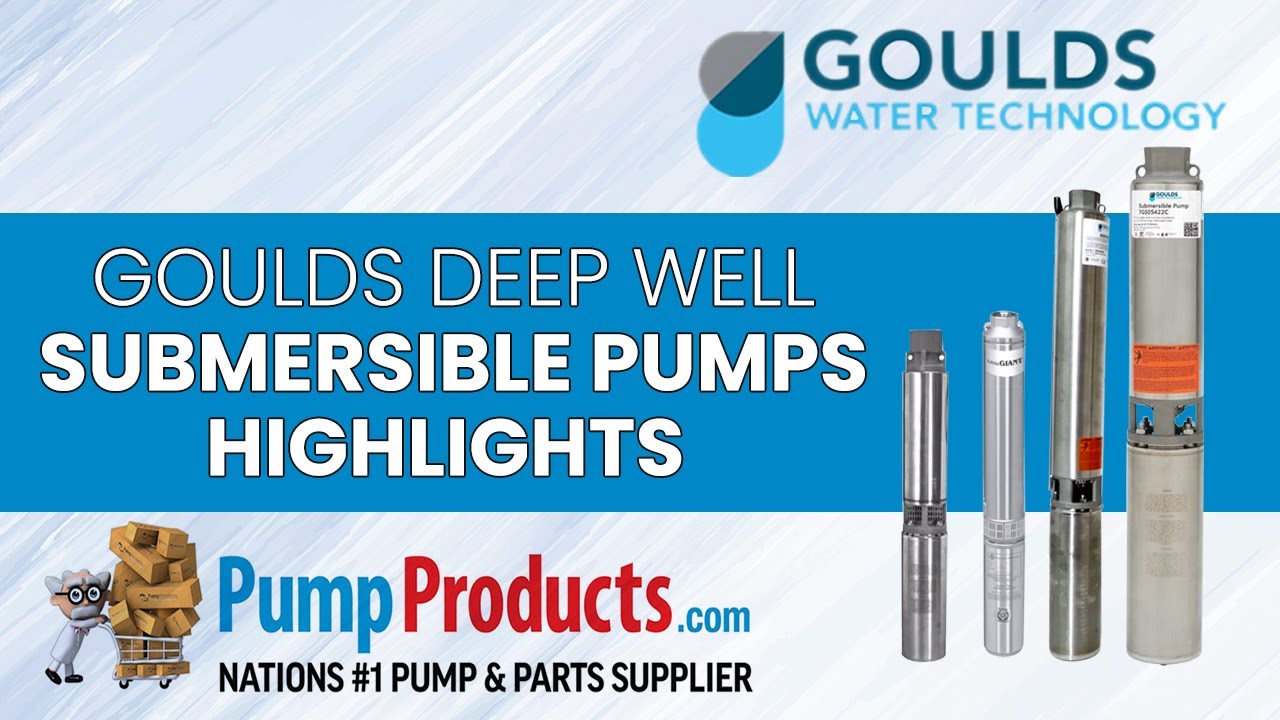
Goulds’ lineup includes a spectrum of submersible and surface pumping configurations, with models optimized for different depths and volumes. For the garden, a few common patterns emerge.
- Submersible models designed for deep wells with good head and moderate flow. These are often quiet in operation and well-suited to drip systems where pressure stability is essential. Multistage configurations that optimize efficiency across a range of heads. If you’re pumping water from a deeper well or you want to maximize efficiency during peak garden watering windows, multistage models can deliver the same head with less energy draw at lower GPM. Robust, simplified surface pumps paired with a vertical lift or jet arrangements for homes with shallower wells who want a straightforward setup with sturdy performance and easier service.
If you’re shopping, look for specifications that line up with your drawdown, your target GPM, and your desired pressure. Where to buy Goulds deep well pumps often boils down to local hardware suppliers with a service mindset, or reputable irrigation specialists who can offer installation support and a warranty that covers both the pump and the controller.
Where the real value lies in the long run

The practical value of a good deep well pump for garden irrigation rests less on the sticker price and more on two things: reliability and predictability. Reliability shows up as fewer trips to the well to reset a system that stalled because of a clogged filter or a stubborn pressure switch. Predictability translates into predictable plant growth, with even moisture distribution and stable soil moisture levels across the growing season. It’s easy to underestimate how much variation in humidity, soil moisture, and root zone temperature can affect crop health. A steady, well-regulated water supply reduces plant stress, which in turn reduces the incidence of disease and the need for corrective measures later.
A quiet, steady pump also means you’re more likely to use the irrigation system as intended rather than resisting it because the system is loud, misfiring, or unreliable. In my own yard, the difference between a noisy, chattering pump and a smooth, quiet operation was not just a matter of comfort. It changed how often I used the system, how evenly I watered, and how I planned irrigation around weather forecasts and seasonal growth cycles. The savings aren’t always dramatic at the monthly bill level, but they accumulate through reduced maintenance costs, longer component life, and better crop health.
Two small but meaningful trade-offs you’ll want to weigh
Trade-off one is energy efficiency versus headroom. A pump that can push water at high pressure for the farthest zones might draw more current during the same timeframe than a smaller capacity unit. If you’ve got solar or other power constraints, you’ll want to match the pump to your actual water needs for a given season and plan for expansion if you anticipate adding features or zones later. It’s a balance between immediate power use and the long-term performance of your irrigation network.
Trade-off two is maintenance burden versus simplicity. A simple system with fewer moving parts is often the most reliable, but it can limit future upgrades. For instance, a single-stage surface pump may be easier to service than a multistage unit, but you might outgrow it if you decide to add more zones or switch to high-efficiency sprinkler heads. In the field I favor modular best deep well pumps setups that allow a straightforward swap of the pump or the motor without triggering a cascade of piping changes. It saves downtime and keeps the garden watered while you upgrade.
Where to buy Goulds deep well pumps and what to expect
If your goal is to upgrade or replace an aging well system for garden irrigation, you’ll find Goulds products through a network of irrigation retailers, farm supply shops, and specialized water well supply houses. The value in shopping through these channels is the ability to leverage local knowledge—knowledge about the well depth, the typical sediment load, and the most effective filtration and pressure control configurations for your area. When you walk into a shop with a well in mind, I recommend bringing a sketch of your yard layout, a rough map of zone locations, and your irrigation schedule for the peak season. These details help a salesperson or a technician guide you toward a model that truly fits, not just something that looks right on the shelf.
Reading the installation manual carefully can save you headaches. Pay close attention to the recommended pipe sizes, the maximum operating pressure, and the required electrical connections. If you’re in unfamiliar territory, consider bringing in a licensed pump installer for the initial setup. A handful of dollars spent on professional installation can save you days of frustration and protect your warranty. The goal is to get the system right the first time and to build a setup that you can confidently manage for years.
The garden as a system, not a collection of parts
A well-designed garden irrigation system is less about raw pumping power than it is about harmony between water supply, soil, and plant needs. A Goulds deep well pump can be a dependable backbone to that system, but it performs best when integrated into a comprehensive plan: selective filtration, a well-placed pressure tank, a reliable pressure switch, and a thoughtful distribution network that matches the water’s behavior to plant requirements. The moment you start listening to the garden—the way soil holds moisture, how the grass recovers after a trim, when the vegetables drink most during a heat wave—you gain a practical sense of how to fine-tune the entire setup.
In fieldwork, I’ve found that the best outcomes come from ongoing observation. If your system runs flagged or if a single zone is notably drier than the others, you don’t blame the pump first. You check the emitters, the line integrity, the filter status, and whether a pressure drop is occurring at a particular point in the circuit. The pump is a potent tool, but it is part of a larger ecosystem. With Goulds, you are choosing equipment that is designed to be part of that ecosystem for years, not just a season.
A closing reflection from the garden path
When you stand at the wellhead and hear the pump begin to hum, there is a small, practiced rhythm to it. It’s the rhythm of a garden that is watered well enough to grow in a climate that isn’t always forgiving. It’s the quiet assurance that your crops will have the moisture they need when the sun is at its harshest. It’s also the sense that you’ve chosen a solution with staying power—an investment in reliability that pays off every time you step outside to check on the beds at dawn or dusk.
Goulds deep well pumps aren’t magic. They’re sturdy tools designed for the unpredictable realities of groundwater. They thrive in the hands of a gardener who respects environment and equipment alike. They reward you with steady pressure, consistent water delivery, and the confidence that, on the hottest day, your irrigation system will meet the moment rather than fail it.
If you’re weighing options, remember that the best choice isn’t always the loudest or the most powerful. It’s the choice that fits your well, your garden, and your routine. It’s the choice that keeps your soil evenly moist, your plants thriving, and your water usage predictable enough to plan around the seasons. In that sense, Goulds deep well pumps become more than a piece of hardware. They’re part of the living system you nurture every day, a quiet partner in the ongoing work of growing food, beauty, and resilience in your own yard.